Switches and relays
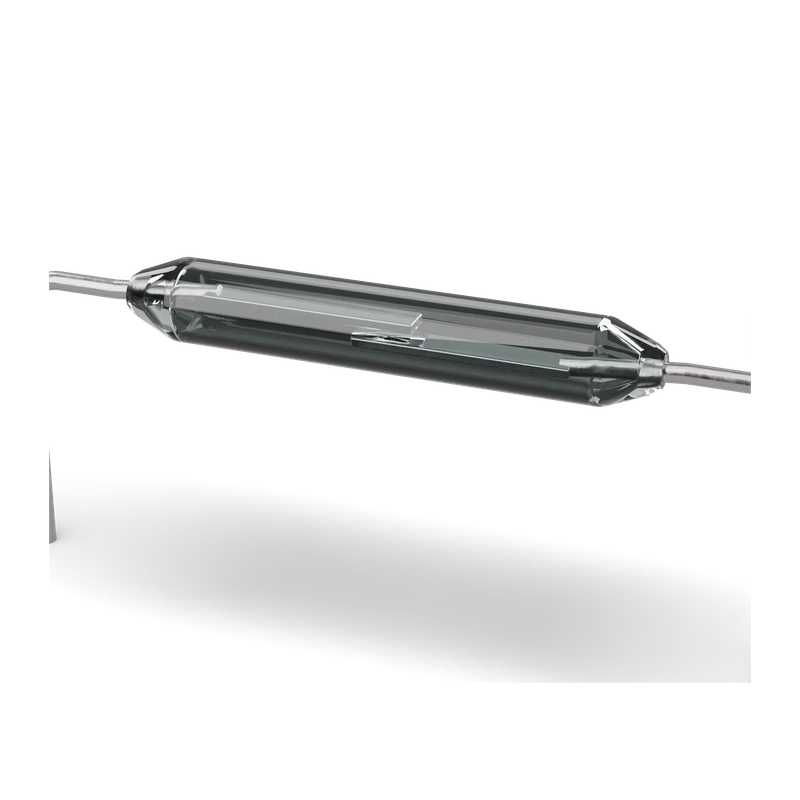
Switches open or close a connection. Some work only while pressed (momentary); others retain their position (latching). A relay uses an inductor coil; a reed switch uses a magnet.
6 types2 groupsSymbol IEC
Manual control
4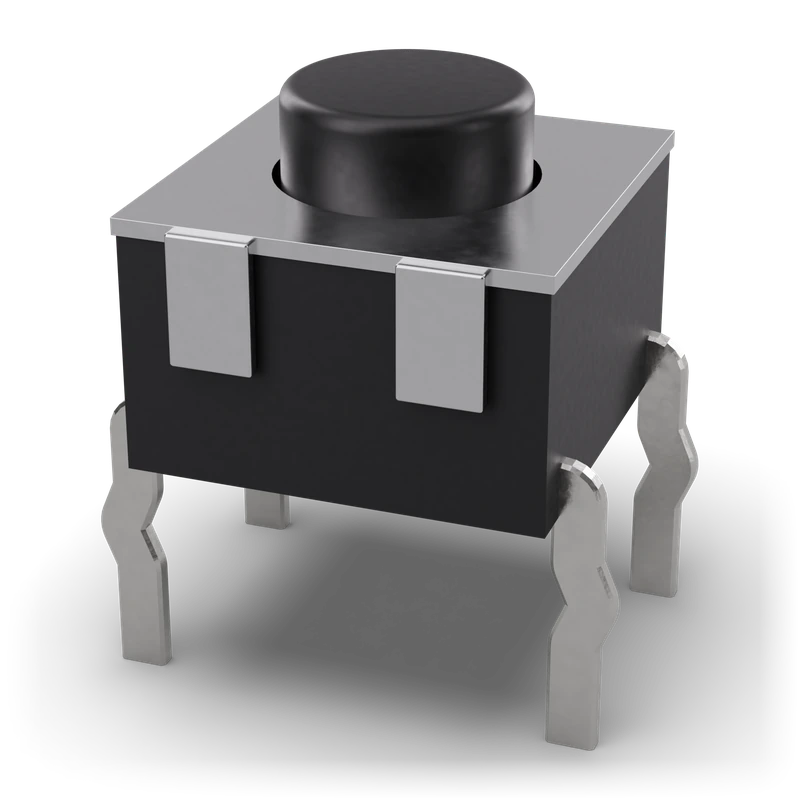
ButtonInput that closes the circuit while held: reset, user input
- Size
- 6 × 6 mm
- Type
- NO (normally open)
- Value
- 50 mA, 12 V DC
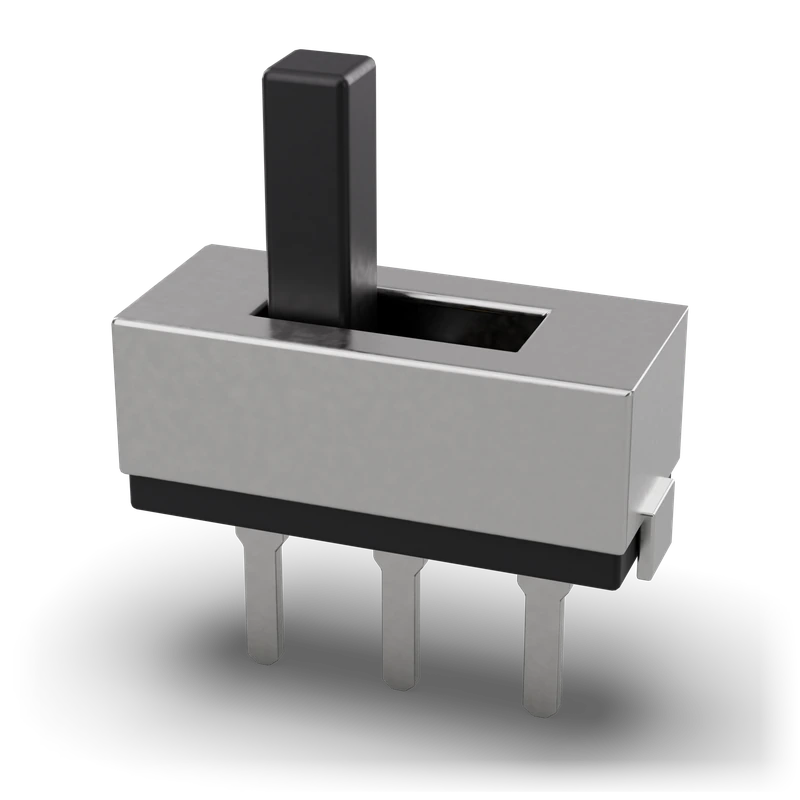
Slide switchSwitching small circuits on and off or choosing between two paths
- Type
- SPDT
- Position
- 2
- Operation
- Latching
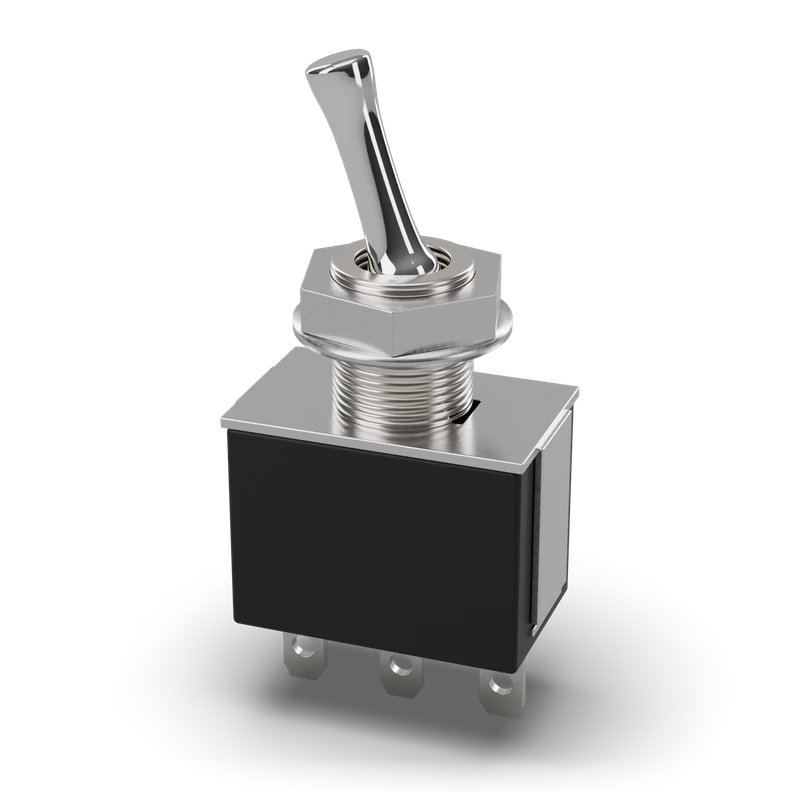
Toggle switchClear on-off from the panel; the device’s main switch
- Type
- SPDT · SPST
- Current
- A few A
- Mounting
- Panel (6 mm hole)
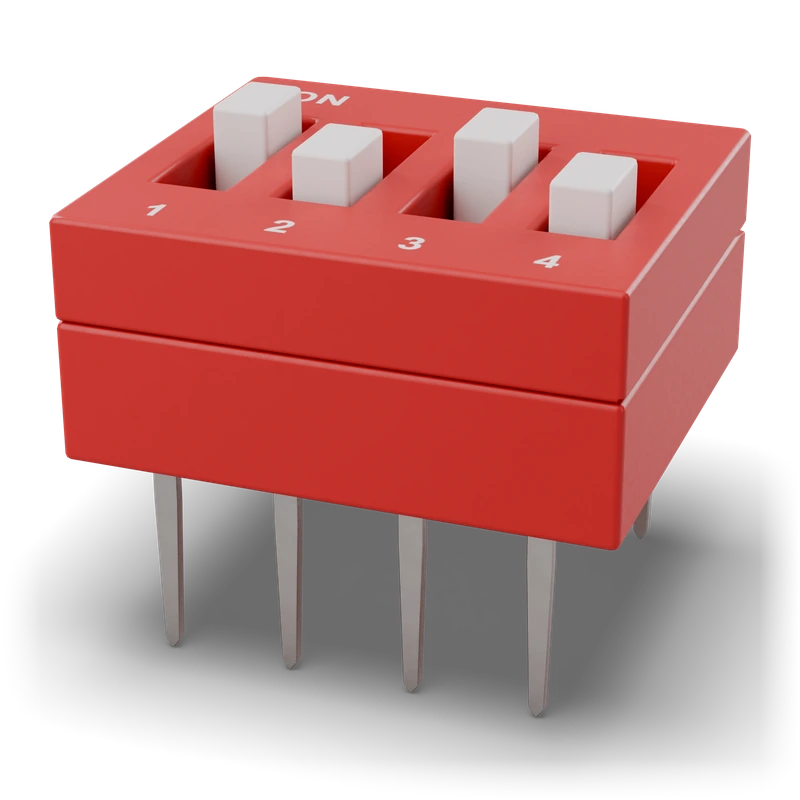
DIP switchA few bits of settings on the board: address, mode, option
- Position
- 4 · 8
- Range
- 2.54 mm
- Current
- Signal level
By electricity or a magnet
2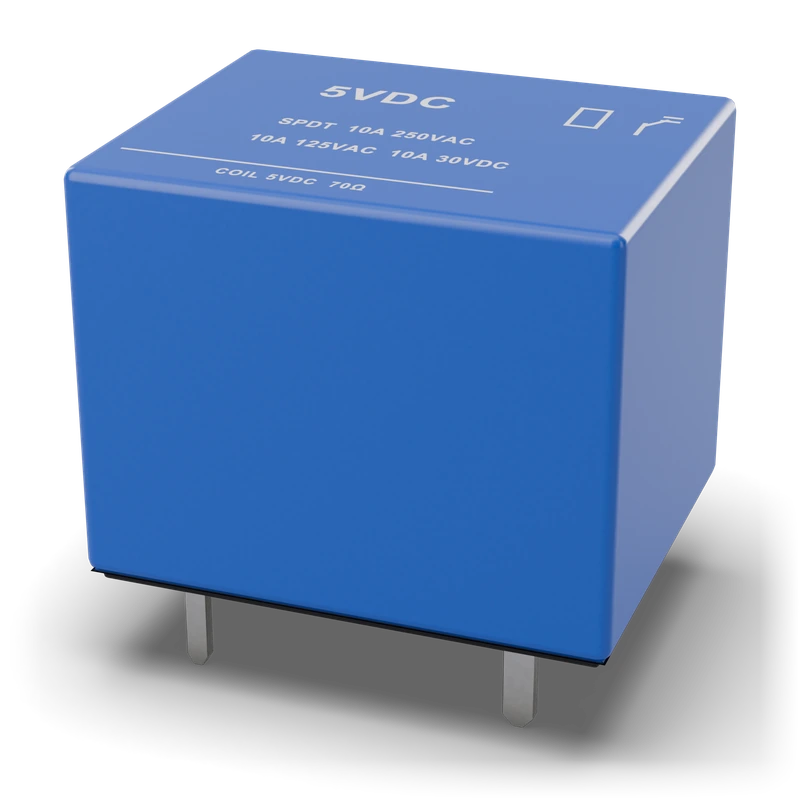
Which one should I choose?
1
For operation while pressed, stopping on release
Momentary operation, fits straight into a breadboard.
2
3
If you want a main switch clearly visible on the panel
Secured to the panel with a nut so it stays in place.
4
If you will choose the board’s setting with a few bits
Many small switches side by side in one body.
5
If you will switch a separate, powerful circuit with a microcontroller
The control circuit and load circuit are electrically separate.
6
If you will detect without contact when the door opens
Closes with a magnet, no parts rub against each other.
Compare6 types · 5 features
| Type | Operation | What triggers it | Contact | Current | Typical use |
|---|---|---|---|---|---|
| Button | Momentary | Finger | SPST, NO | ≈50 mA | Input, reset |
| Slide switch | Latching | Finger | SPDT | Low | On-off, selection |
| Toggle switch | Latching | Finger | SPST · SPDT | A few A | Main switch |
| DIP switch | Latching | Pen tip | SPST × 2–12 | Signal (≈25 mA) | Address, mode selection |
| Relay | Connected to inductor coil | Inductor current | SPDT (NO + NC) | 10 A (contact) | Switching a heavy load |
| Reed switch | Attached to a magnet | Magnet | SPST, NO | Low | Door sensor |
Contact currents vary by model; check the limit in the datasheet.